Snake Bite, First Aid

മലയാളം
Dos
A. If you are alone,
- Move to a safer area.
- Do not walk or run. When you run, blood circulation increases and it increases the possibility of the snake venom spreading in the bloodstream.
- Avoid active movement of bitten part. Muscle contraction increases spread of venom.
- Keep your act together and call someone for help. Access to mobile phones will be helpful in such cases.
B. If you are not alone
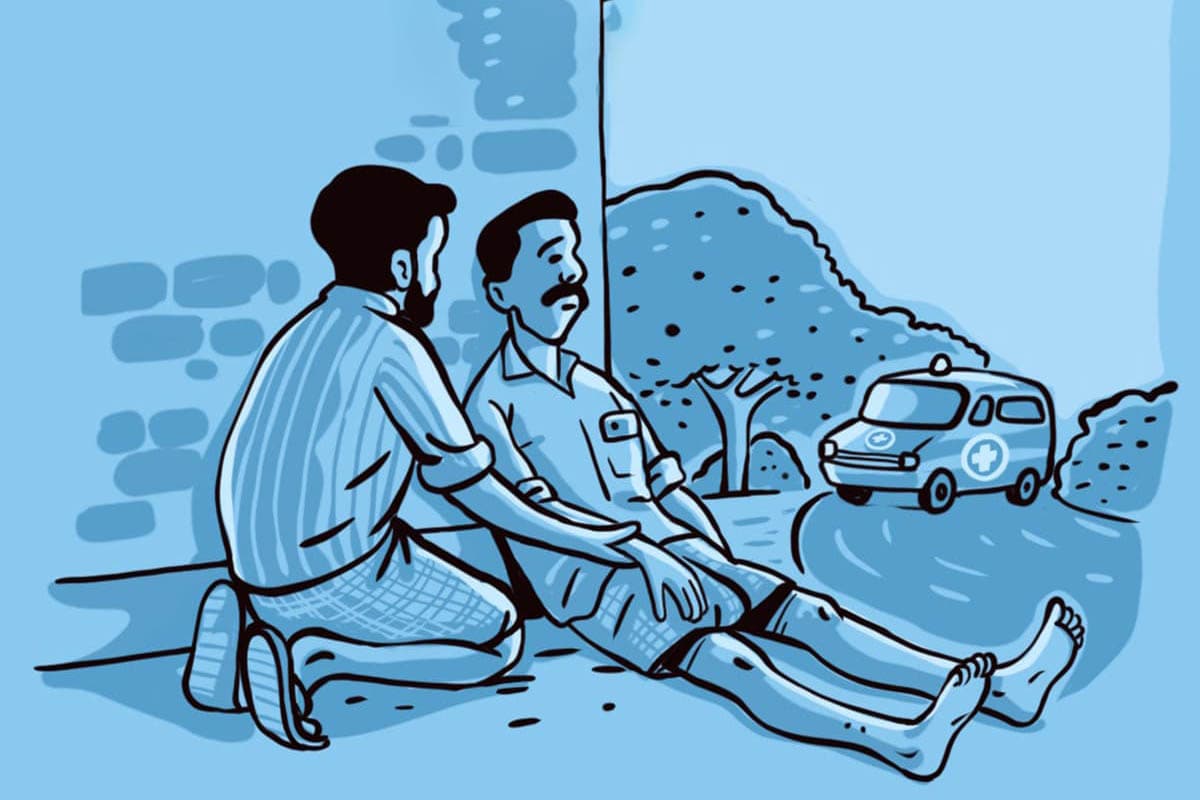
- Move to a safer area.
- If the snake continues to cling on your body, your friend can use a stick or a twig to pull the snake out of the bitten area.
- While doing so, take precautions to not get bitten twice. The friend helping you should also protect themselves from getting bitten.
- Do not spend time to identify the snake, catch or kill it. Time is valuable here as every delayed minute can significantly affect the survival chances of the person who is bitten by the snake.
- If you are not alone, the friend can attempt to take a photo of the snake from a safe distance. However, do not spend a lot of time doing it, and safeguard oneself from further bites.
- It is important to console the person who is bitten by the snake. This will help to reduce his/her anxiety and calm themselves. Fear and anxiety can lead to increased blood circulation which can cause the venom to circulate faster to vital organs such as kidneys, brain and heart.
- Cover the bite wound with a bandage if it is bleeding.
- Seek treatment at a hospital that has facilities for managing snake bite. If you have been bitten by one of the “Big Four“ snakes, the treatment is to inject antivenom (ASV). Therefore, it is important that you seek treatment at a hospital where ASV is available and trained staff can take care of you. It is imperative to call the hospital ahead of time before you go there.
- It is common practice to tightly tie a cloth above the bite wound. This is not advisable as it may decrease the blood circulation to the area below the wound.
- Remove all clothing over the bitten area.
- Remove all jewelry (such as rings, anklets and bangles) around the bitten area. If the bitten area becomes oedematous, it becomes harder later on to remove the jewelry.
- While shifting the person to the hospital, it is important to not move the bitten area. Do not make the person walk. Always lay the person on a stretcher and move the stretcher to the ambulance/vehicle.
- While traveling to the hospital, the person should not lay flat. It is imperative to lay the body sideways with the head facing one side.
The person may vomit if he/she has been affected by the venom. If the person lies flat and vomits, undigested food particles can enter the airway and block it.
If the venom has affected the nervous system, it might cause paresis of the tongue and throat. This can result in airway obstruction if the person lies flat.
- In case only two-wheelers are available for shifting the person to the hospital, the affected person should only be seated between two healthy persons.
- It is important to give a detailed description of all the symptoms to the doctor. It is often the symptoms that help the doctor to decide on the course of treatment.
Dont’s:
- Don't rely too much on the fang marks to decide the type of snake. Leave it to the experts.
Snakes like Cobra and Krait may inflict very small wounds which are sometimes not visible to the eye. If venomous snakes have bitten twice, there could be more than two bite marks. It is possible that impressions of all the teeth of the snake are found in the bite mark. If the person moves their body during snake bite, the shape of the bite mark could differ from the typical bite wound. Sometimes, the bitten snake may have lost teeth and the wound patterns would then not resemble the typical bite mark. Therefore, it is not advisable to self determine the venomocity of the snake. Instead, seek treatment at a hospital fully equipped for snake bite care.
- Using medicated stones or herb preparations are dangerous and time consuming. The only scientific treatment for snake venom is anti-venom (ASV). ASV cannot neutralize the venom that has already disseminated into the body organs. Therefore, it is important to seek modern medical treatment as early as possible to prevent the dissemination of the venom to vital organs.
- Do not drink alcohol, smoke or eat food. Nicotine present in tobacco and alcohol can dilate the blood vessels and causes the venom to easily spread via blood. Caffeine present in coffee and tea also has similar effects.
- Do not try to make wounds around the bitten area and let out blood. Viper toxin affects the ability of the blood to clot. Therefore, blood letting could mean that the person bleeds to death.
- Do not try to suck up blood from the bite wound by mouth. This is dangerous as the person sucking up blood can also be affected by the venom.
- Do not cover the wound by using herbs or leaves as it may lead to wound infection. Do not self-medicate with herbs and leaves.
- Do not use ice on the wound.
- Do not burn the wound.
- Do not tie a bandage or cloth tightly for reducing blood circulation to the organs above the affected area. If you do so, the blood flow below the affected area may reduce significantly and it can lead to serious damage to this area. It is instead advisable to not move the affected area to reduce blood circulation.
Many people still tie a cloth or bandage above the wound despite expert advice against it. If you are tying a cloth, tie it in such a way that there is at least one finger-breadth gap between the cloth and the skin. The tie should be loosened up if the area becomes oedematous.
- Do not try to bring the snake (killed or alive) to the hospital for identification. This may delay the person from reaching the hospital early.
The treatment for snake bite is decided by examining the symptoms and by doing lab tests. Therefore, identifying the snake does not play any role in deciding if a person gets ASV or not. Some snake bites could be ‘dry bites’, where no venom enters the person’s body even if the bitten snake is venomous. If there are no symptoms and lab parameters are normal, no ASV is administered in case of dry bites.
It may be possible that you have caught the wrong snake. Several snakes have the same habitat and there can be many snakes in the same area. The person searching for the snake could be bitten by a venomous snake during the searching process. Always leave snake rescue to experts and act judiciously.
The antivenom (ASV) available in India works against the venoms of the four main venomous snakes found in India. Therefore, it is immaterial to know the type of the snake because the treatment for all venomous snakes is by using a single type of ASV.
The doctor determines the treatment and ASV dose by carefully observing the symptoms and lab parameters. This dose does not change with respect to age or the size of the wound.

 English